
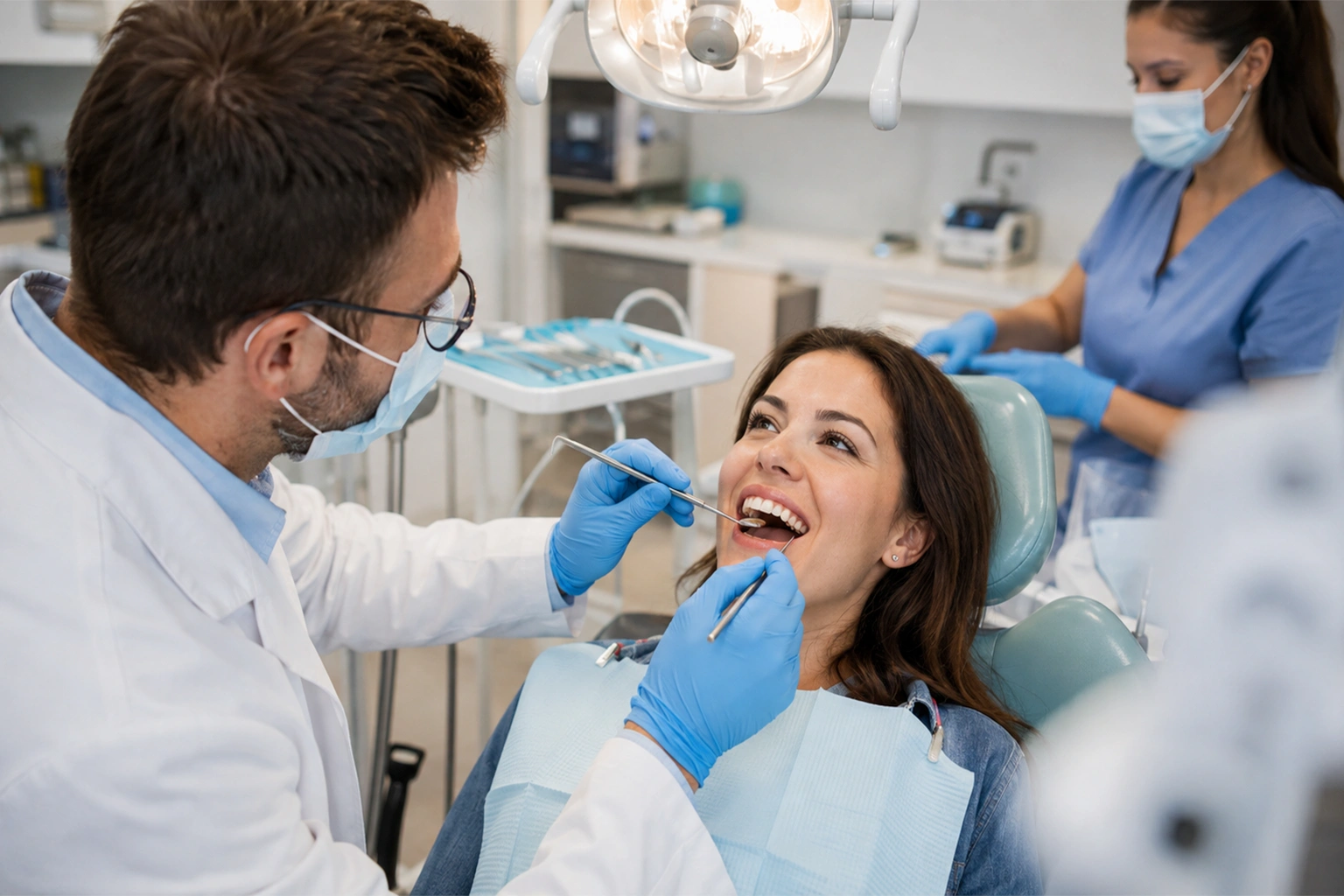
Why Professional Dental Cleanings Are Important
Daily brushing and flossing form the foundation of preventive dental care. However, toothbrush bristles and floss may not remove every deposit around the gumline, between crowded teeth, or behind the back molars.
Plaque is a soft film that continually forms on the teeth. When it remains in place, it can harden into tartar, which is also called calculus. Dental professionals use specialized instruments to remove these deposits without relying on harsh scrubbing at home.
Routine cleanings also give the dental team a chance to look for changes that may not be obvious to the patient. These may include gum irritation, areas that are difficult to keep clean, worn restorations, or changes in the way the teeth come together. Finding a concern does not automatically mean extensive treatment will be needed. It simply allows the dentist to explain the finding and discuss reasonable next steps.
What Happens During a Routine Dental Cleaning?
Each appointment is tailored to the patient, so the exact sequence can vary. In general, a preventive visit may include a health history review, an oral evaluation, removal of plaque and tartar, polishing, and personalized home-care guidance.
Review of Dental and Health Information
The appointment may begin with questions about medications, health changes, dental sensitivity, bleeding gums, or areas of discomfort. Patients should mention anything unusual, even if it seems minor. Certain health conditions and medications can affect the mouth, while dental symptoms may change how the team approaches the cleaning.
Examination of the Teeth and Gums
The dentist or hygienist may inspect the teeth, gums, tongue, and other visible oral tissues. Gum measurements may be taken when appropriate to help evaluate the spaces around the teeth and monitor changes over time.
Dental X-rays are not necessarily required at every cleaning. The dentist determines whether they are appropriate based on factors such as current findings, dental history, age, symptoms, and previous images.
Plaque and Tartar Removal
The hygienist typically uses small hand instruments or an ultrasonic device to loosen and remove buildup. An ultrasonic instrument uses gentle vibration and water to break apart deposits. Hand instruments allow the hygienist to carefully clean specific tooth surfaces and areas near the gumline.
Patients may hear scraping sounds or feel water and pressure, but the process should remain manageable. If an area feels sensitive, raising a hand or speaking up lets the hygienist pause and adjust the technique.
Polishing and Cleaning Between the Teeth
After the deposits are removed, the teeth may be polished with a mildly abrasive paste. Polishing helps remove some surface stains and leaves the teeth feeling smooth. Floss or another interdental tool may then be used to clean between the teeth and check areas where food or plaque tends to collect.
Personalized Home-Care Advice
A helpful cleaning appointment should involve more than being told to “brush better.” The hygienist may demonstrate a brushing angle, suggest a flossing technique, or discuss tools that fit the patient’s needs. Someone with braces, dental implants, bridges, crowded teeth, or limited hand mobility may benefit from a different approach than someone without those concerns.
Will a Dental Cleaning Hurt?
A routine cleaning is comfortable for many patients, although individual experiences vary. Tender gums, exposed root surfaces, heavier tartar buildup, or existing sensitivity can make certain areas feel more noticeable.
Patients do not need to silently tolerate discomfort. The dental team may be able to use lighter pressure, change instruments, apply a sensitivity product, take short breaks, or discuss numbing options when appropriate. Letting the office know about dental anxiety before the appointment can also help the team plan a calmer experience.
Some people notice temporary gum tenderness or tooth sensitivity after a cleaning, particularly when there was significant buildup near the gumline. A clinician should be contacted if discomfort is severe, continues unexpectedly, or is accompanied by another concerning symptom.
Routine Cleaning vs. Deep Cleaning
A routine preventive cleaning and a deep cleaning are not interchangeable. A routine cleaning focuses primarily on plaque and tartar around the visible tooth surfaces and gumline for a patient whose gum condition does not require periodontal therapy.
A deep cleaning, often called scaling and root planing, is a different form of care used when deposits and inflammation extend below the gumline. It may involve numbing, treatment of selected areas, and follow-up visits to evaluate the gums.
The recommendation should be based on an examination and relevant measurements rather than appearance alone. If deep cleaning is advised, patients can ask what findings led to the recommendation, which areas need treatment, and what follow-up care may be necessary.
How Often Should Teeth Be Professionally Cleaned?
There is no single schedule that fits every patient. The recommended interval depends on gum health, cavity history, tartar accumulation, home-care effectiveness, dry mouth, tobacco use, dental restorations, and other individual factors.
A person with stable oral health may need routine preventive visits at a different interval than someone receiving ongoing gum care. The best schedule is the one recommended after a dental professional evaluates the mouth and reviews the patient’s history.
How to Prepare for a Dental Cleaning
A little preparation can make the appointment more efficient and comfortable:
- Share updated health information. Bring a current medication list and report recent diagnoses, procedures, allergies, or pregnancy.
- Mention sensitivity or anxiety. The team can often adjust the pace and explain each step before proceeding.
- Describe specific concerns. Point out bleeding, food traps, rough edges, bad tastes, or areas that feel different.
- Bring insurance information. Current details help the office review available benefits, although coverage varies by plan.
- Ask for clarification. Patients should feel comfortable asking why an X-ray, treatment, or shorter recall interval is being recommended.
There is no need to overbrush immediately before the appointment. Brushing and flossing normally is enough, and aggressive last-minute cleaning may make sensitive gums feel more irritated.
What Does a Dental Cleaning Cost in Santa Maria?
The cost of a dental cleaning in Santa Maria can vary according to the type of cleaning, whether an examination or X-rays are needed, the patient’s insurance benefits, and the condition of the teeth and gums. A routine preventive cleaning generally has a different fee structure from periodontal treatment or a deep cleaning.
Before the appointment, patients can ask whether the quoted amount includes the examination and any necessary images. They may also request an itemized estimate and ask the office to explain expected insurance coverage and out-of-pocket costs. Orcutt Hills Dental Studio offers additional general information in its overview of dental care costs and payment considerations in Santa Maria. Actual fees and benefits should always be confirmed directly with the practice and insurance provider.
Frequently Asked Questions About Dental Cleanings
Can a dental cleaning remove stains?
Polishing may reduce some surface stains caused by foods, drinks, or other habits. It does not change the natural internal color of the teeth. Patients interested in a brighter shade can ask whether professional whitening or another cosmetic option is appropriate.
Can someone get a cleaning while wearing braces?
Yes. Professional care can be especially helpful because brackets and wires create additional places for plaque to collect. The cleaning technique may be modified to work safely around the orthodontic appliances.
Why do gums sometimes bleed during a cleaning?
Bleeding may occur when gum tissue is irritated or when deposits are being removed from an inflamed area. It can also have other causes. The dental team can evaluate the pattern and explain whether home-care changes, monitoring, or further treatment should be considered.
Should teeth be cleaned if they already feel fine?
Yes, when a dental professional recommends preventive care. Early dental and gum changes do not always cause discomfort. A cleaning and examination can help maintain health while allowing the team to monitor areas that a patient cannot easily see.
Is a deep cleaning simply a more thorough regular cleaning?
No. Deep cleaning is periodontal treatment that addresses deposits below the gumline when clinical findings indicate it is needed. It differs from a routine preventive cleaning in purpose, technique, and follow-up.
What if a patient has not visited a dentist in several years?
There is no reason to feel embarrassed. The first step is an examination to understand the current condition of the teeth and gums. The team can then prioritize concerns and develop a manageable plan without judgment.
Schedule a Comfortable Dental Cleaning in Santa Maria, CA
Professional cleanings support a preventive approach to dental care and provide an opportunity to understand what is happening in the mouth. The right appointment should feel informative, respectful, and tailored to the individual rather than rushed or one-size-fits-all.
Patients looking for a dental cleaning in Santa Maria, CA can contact Orcutt Hills Dental Studio to ask questions, discuss comfort concerns, and arrange an evaluation. Call (805) 608-4140 to speak with the team and take the next step toward a cleaner, healthier smile.